Expert context · Launch & Go-to-Market
Launches and Go-to-Market: The Best Thinking, Applied
Expert marketing context from leading books and practitioner writing on launches and go-to-market. Add it, and Claude, ChatGPT or Marcora draws on it when you ask.



Nine questions that come up in every launch, from whether a launch is an event or a stretch of work, to who owns launch day, to what to do when it lands flat. Each item draws on the leading books (Martina Lauchengco, April Dunford, Geoffrey Moore, Al Ries and Jack Trout, and the Play Bigger authors) and ends with a method you can run on your own launch. Where the authors disagree, the item says when each one fits.
Each item takes a decision you face when taking a product to market, brings the best of the books to it, and finishes with steps for your situation. Pull one into a working session when you are about to make that decision.
Books behind this collection
Marcora wrote the items in this collection from these books. The authors haven't reviewed or endorsed them.
 Loved (opens in a new tab)
How to Rethink Marketing for Tech Products
 Play Bigger (opens in a new tab)
How Pirates, Dreamers, and Innovators Create and Dominate Markets
 Sales Pitch (opens in a new tab)
How to Craft a Story to Stand Out and Win
 Positioning (opens in a new tab)
The Battle for Your Mind
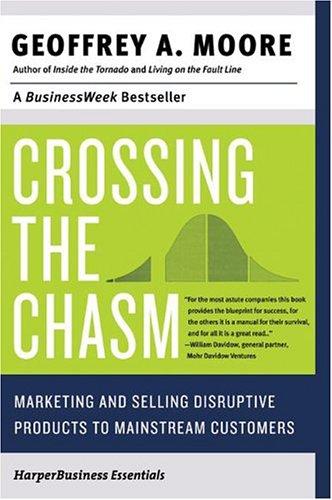 Crossing the Chasm (opens in a new tab)
Marketing and Selling Disruptive Products to Mainstream Customers
In this collection
Is a launch an event you stage, or a stretch of work you run?
Helps you decide what the launch date is for and what belongs before and after it. Draws on Lauchengco's Loved, Ries and Trout's Positioning, and Play Bigger by Ramadan, Peterson, Lochhead and Maney. Gives you a three-phase plan and a test for sorting each activity into the day or the stretch.
When should you launch: on the buyer's calendar or on your own?
Launch dates are usually set by the company's needs and the buyer's are found later. Compares Lauchengco's Loved, Ries and Trout's Positioning, Play Bigger and Dunford's Sales Pitch on timing. Gives you four tests for a window and what to do when the buyer's window and your urgent date disagree.
How much launch does each release deserve, and when is quiet the right size?
For teams shipping faster than they can launch. Uses Lauchengco's Loved, Ries and Trout's Positioning, Dunford's Sales Pitch and Play Bigger. Gives you four questions that set a release's level, a way to build a sizing scale product and go-to-market both use, and a way to make a quiet release a decision.
Who owns launch day: product, product marketing or sales, and who breaks ties?
Everyone is involved in a launch and nobody is in charge of it. Compares Lauchengco's Loved, Ramadan and co-authors' Play Bigger and Dunford's Sales Pitch. None gives a tie-break rule, so this item builds one: owners by launch level, and who decides each disagreement before it happens.
What do sales and customer-facing teams need before a launch, and by when?
Sets out what sellers and support must have before an announcement, and the order to get it ready. Draws on Dunford's Sales Pitch, Lauchengco's Loved and Play Bigger by Ramadan and co-authors. Includes a seven-part list and a sequence that ends with setting the outward date only once sellers are ready.
Which buyers should get an early version first, and how do you choose them?
Early users are not a sample of the market, and who gets the product first decides who comes next. Draws on Moore's Crossing the Chasm, Lauchengco's Loved, Ries and Trout's Positioning and Dunford's Sales Pitch. Gives you a screen for choosing the first group, a check that its members will recommend you, and how to run early access and widen.
What counts as a launch working, and when do you check?
Early numbers flatter and the proof arrives late. Draws on Lauchengco's Loved, Ries and Trout's Positioning, Play Bigger and Dunford's Sales Pitch. Gives you four kinds of evidence to agree before the date, a signal that cannot be bought, and a schedule for reading each so early readings are not mistaken for verdicts.
What do you do when a launch lands flat?
A flat launch invites more spend on the same message. Uses Ries and Trout's Positioning, Lauchengco's Loved, Dunford's Sales Pitch and Play Bigger. Gives you five possible causes with the evidence that shows each, and a repair matched to each so you change the smallest thing the diagnosis allows.
How do you keep launch materials accurate after launch without letting the message drift?
Materials go stale and drift at once, and fixing one tends to cause the other. Compares Dunford's Sales Pitch, Lauchengco's Loved, Play Bigger and Ries and Trout's Positioning. Shows how to split a fixed core claim from a changing layer, give each an owner, and run checks that catch both problems.
Add this collection to Marcora
Once it's added, Marcora draws on the relevant items when it drafts and plans for your team.
Add to Marcora