Expert context · Positioning & Messaging · Featured
Positioning: The Best Thinking, Applied
Expert marketing context from leading books and practitioner writing on positioning. Add it, and Claude, ChatGPT or Marcora draws on it when you ask.



Eleven questions that come up in every positioning effort, from who owns the work to how narrow to aim first to whether to create a category. Each item draws on the leading books (April Dunford, Martina Lauchengco, Al Ries and Jack Trout, and the Play Bigger authors) and ends with a method you can run on your own company. Where the authors take different approaches, the item says when each one fits.
Each item takes a decision you have to make, brings the best of the books to it, and finishes with steps for your situation. Pull one into a working session when you are facing that decision.
Books behind this collection
Marcora wrote the items in this collection from these books. The authors haven't reviewed or endorsed them.
 Loved (opens in a new tab)
How to Rethink Marketing for Tech Products
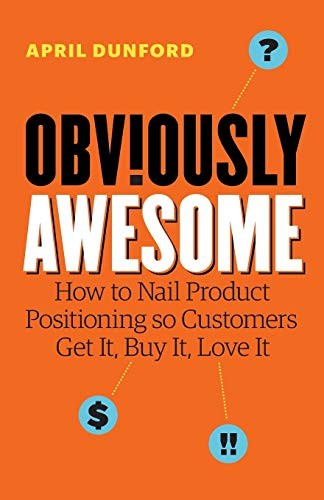 Obviously Awesome (opens in a new tab)
How to Nail Product Positioning so Customers Get It, Buy It, Love It
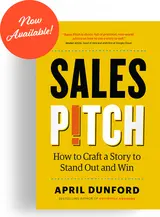 Sales Pitch (opens in a new tab)
How to Craft a Story to Stand Out and Win
 Play Bigger (opens in a new tab)
How Pirates, Dreamers, and Innovators Create and Dominate Markets
 Positioning (opens in a new tab)
The Battle for Your Mind
Practitioner pieces
Some deep dives also draw on a practitioner's public writing. The authors haven't reviewed or endorsed these deep dives.
Kuber Sharma
Senior Director of Product Marketing, UiPath
How we created a category nobody asked for (opens in a new tab)Andy Raskin
Strategic narrative consultant
What I Learned Positioning 40 Companies (opens in a new tab)Tamara Grominsky
Founder, PMM Camp
Identifying and multiplying your best customers (opens in a new tab)
In this collection
Is positioning something a company decides, or something the market decides about it?
A way to decide whether your positioning work has an end date or needs ongoing tracking. Draws on April Dunford's Obviously Awesome and Martina Lauchengco's Loved. Covers why the default position is usually wrong, a fixed order for making the frame-of-reference decision, and how to tell whether the position has moved by what other people say about you.
Which positioning rules have actually survived forty years, and which were artifacts of how buyers could be reached at the time?
Sorts the advice you have inherited into rules that still hold and rules tied to an older way of reaching buyers. Reads Al Ries and Jack Trout's Positioning (1981) alongside Dunford's Obviously Awesome, Lauchengco's Loved and the Play Bigger authors (Ramadan, Peterson, Lochhead and Maney). Includes a test for any rule you are about to apply.
How far can customers be trusted to tell you what category you are in?
Customers hold the comparison set that decides your positioning, and asking them directly gets a thin answer. This item combines Dunford's Obviously Awesome and Sales Pitch with Lauchengco's Loved to give you questions that surface what buyers compared you to, plus guidance for when they keep filing you in the wrong place.
How narrow should the first target segment be — narrow enough to hit the number, or narrow enough to carry you to the next segment?
Choosing a first segment means weighing enough buyers to make the number against buyers who lead to the next ones. Dunford's Obviously Awesome and Lauchengco's Loved each cover one side. Gives you two filters to apply together, a way to decide by runway, and a check for a segment that buys and never refers anyone.
Is an existing category something you inherit for free, or something you rent from whoever defined it?
Entering a recognized category saves you education costs and also hands the evaluation criteria to whoever defined it. Draws on Dunford's Obviously Awesome, Lauchengco's Loved and Play Bigger by Ramadan, Peterson, Lochhead and Maney. Gives you a way to price that trade for your company and the ways each choice tends to fail.
Can a company choose to create a category, or does the market have to move first?
For a company deciding whether to attempt a new category. Dunford's Obviously Awesome and Lauchengco's Loved both treat it as expensive and rarely right, and they locate the deciding factor differently: your resources or the industry's own movement. Includes checks for whether a category is available and a way to run an attempt.
Also draws on How we created a category nobody asked for by Kuber Sharma. Read the original (opens in a new tab)
What did category creation assume about launches, and what has to replace that assumption now?
The case that categories are made has held up well, and the one-big-launch model that came with it depends on conditions that may have changed. Uses Play Bigger (Ramadan, Peterson, Lochhead and Maney), Lauchengco's Loved and Dunford's Sales Pitch. Shows how to check which conditions still hold and how to establish a frame without one big moment.
Both leading positioning frameworks reject the fill-in-the-blanks statement, then both ship a one-page canvas. What is the actual difference?
Dunford's Obviously Awesome and Lauchengco's Loved both reject the fill-in-the-blanks statement and both offer a one-page canvas, and the two canvases do different jobs. Gives you a way to tell whether your own one-pager is analysis or a tidy record of existing opinion, and the signs that it has slipped back.
What does positioning owe a buyer's decision, beyond making the product understood?
A buyer can understand you perfectly and still buy nothing. This item draws on Dunford's Obviously Awesome and Sales Pitch and Lauchengco's Loved to show what positioning has to supply past clarity: a method for building the comparison rubric that lets a buyer choose, and the case a champion can defend in a room you are not in.
Does a position become real when it is written down, when a buyer accepts it, or when the market repeats it?
Helps you decide when positioning work is finished and what to measure afterward. Draws on Dunford's Obviously Awesome and Sales Pitch, which take different views four years apart, and on Lauchengco's Loved. Includes a way to turn a positioning document into claims a buyer can contradict, and to read sales conversations as evidence.
Who should own positioning — the business leader, or the product marketer?
Positioning often fails after it is finished, because nobody owned it. Dunford's Obviously Awesome and Lauchengco's Loved each guard against a different failure. This item shows how to separate the authority to adopt a position from the responsibility to write it, and how to settle disagreements on evidence.
Add this collection to Marcora
Once it's added, Marcora draws on the relevant items when it drafts and plans for your team.
Add to Marcora